The history of Kartause Ittingen
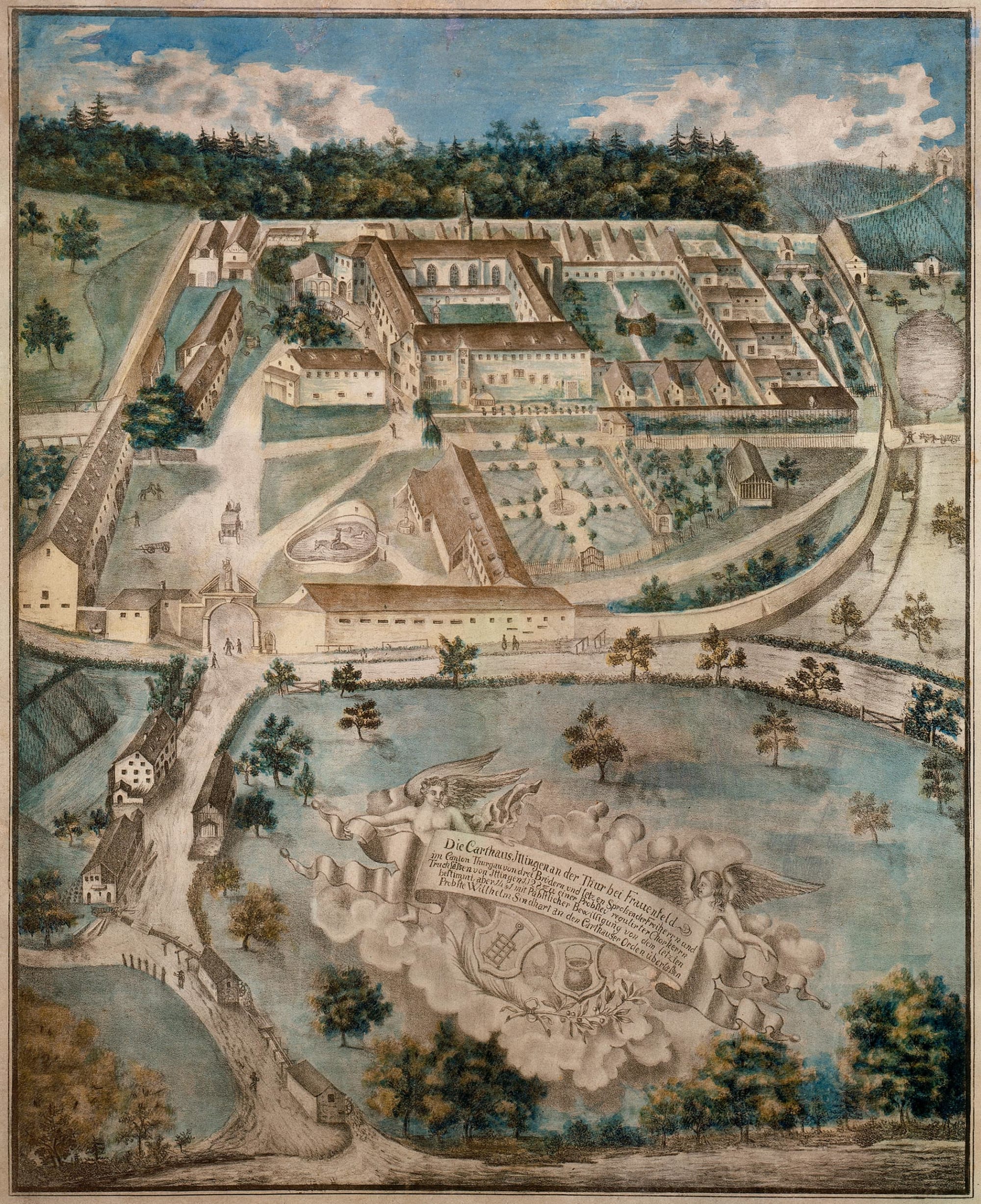
The Cartusian monastery of Ittingen is over 900 years old. Since 1079, it has undergone continuous development and adaptation to new circumstances.
History in pictures

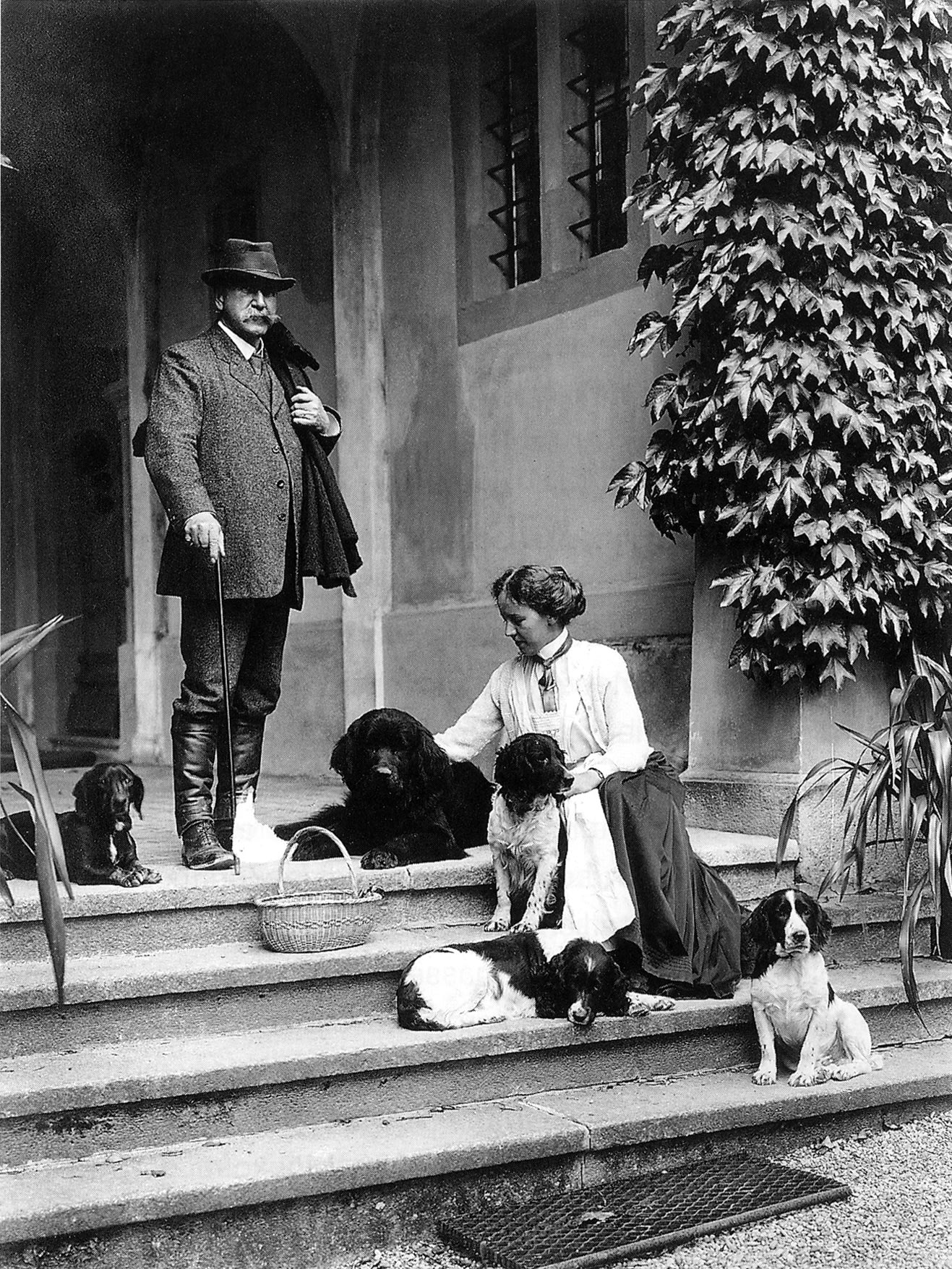
Family Fehr stands in front of the priory



The Story - a chronology
Around 1150: A monastery is founded in Ittingen
In the mid-12th century, the Stewards of Ittingen converted their castle into a monastery. According to legend, two of the steward's sons visited a butcher and then imitated his actions. In the process, one of the boys stabbed the other to death. To atone for this terrible act, albeit committed in childish innocence, the family founded the monastery. The Augustinians ran the canon monastery in Ittingen until the mid-15th century.
1461: The Carthusian Order acquires Ittingen
In 1461, the Carthusian Order acquired the impoverished canon monastery of Ittingen. The buildings were dilapidated and had to be extensively renovated or rebuilt. In addition, a large cloister with cells for hermit monks was added. The Carthusians, who came from abroad and lived in strict seclusion, remained strangers to the local population. They even closed their church to the people, referring them to the parish church in Uesslingen, which was just under an hour's walk from Ittingen. In response, the women of Warth, who had previously attended services in the monastery church under the Augustinians, stormed into the church in anger and refused to leave until they were promised their own chapel in Warth. The Swiss Diet obliged the prior to build the chapel in Warth.
1524: The Ittingen Uprising
In the summer of 1524, an uprising broke out in the border region between Thurgau and Zurich. The Catholic bailiff residing in Frauenfeld Castle arrested a Reformed pastor in Stein am Rhein. The pastor was taken to Frauenfeld. Several thousand people quickly gathered to free him. The Thur River prevented the angry crowd from advancing to Frauenfeld. After spending the night outdoors, the mob got out of control. They stormed the Carthusian monastery and took food and wine from the cellar. Suddenly, the buildings were on fire. The damage was immense. The Federal Diet in Baden sentenced the three ringleaders to death. It took decades for the monastery to recover from the devastation.
1620: The Donation by Ludwig Pfyffer from Altishofen
In 1620, Ludwig Pfyffer from Altishofen donates a large sum of money to the Ittingen Charterhouse to build six new monks' cells. This marks the beginning of a period of economic and spiritual prosperity for the Ittingen Charterhouse.
1743: A New Land Register
The Ittingen Charterhouse land register dates back to 1743. It must have taken Procurator Josephus Wech years, if not decades, to compile this inventory of the monastery's property.
Wech (1702–1761) was an exceptional monastery administrator. He systematically collected all information about the monastery's history, property, rights and obligations and recorded it in detail in 39 handwritten books. Known as Urbaria, these books describe the monastery's development from 1525 to 1760.
Josephus Wech also produced the remarkable monastery property map in 1745. Measuring almost 3 x 5 metres, this property map supplements the urbariums, thereby establishing the monastery's possessions in a legally binding manner. By creating the new urbarium, Josephus Wech filled the sensitive gap left in the monastery archives by the Ittingen storm. This new administrative tool also enabled him to introduce a modern style of administration for the time. His records formed the basis for the professional management of the estates, helping the Ittingen Charterhouse to achieve prosperity in the 18th century.
1848: Dissolution of the Monastery
In the 19th century, social conditions for monasteries changed fundamentally. The French Revolution shook the old feudal order to its core, and the Napoleonic Wars resulted in a reorganisation of the Swiss state. The canton of Thurgau was founded in 1803. Initially, the young, liberal state placed the monastery under state administration, dissolving it in 1848 as it did with most other monasteries in its territory. The monastery buildings were sold.
1867: Purchase of Ittingen Charterhouse by Viktor Fehr
In 1867, Viktor Fehr, aged just 21, acquired Ittingen Charterhouse. He came from a wealthy patrician family in St. Gallen. His father was a banker and financed the purchase for his son. Until Viktor Fehr's death in 1938, he lived in the former monastery and ran a large agricultural business with many employees.
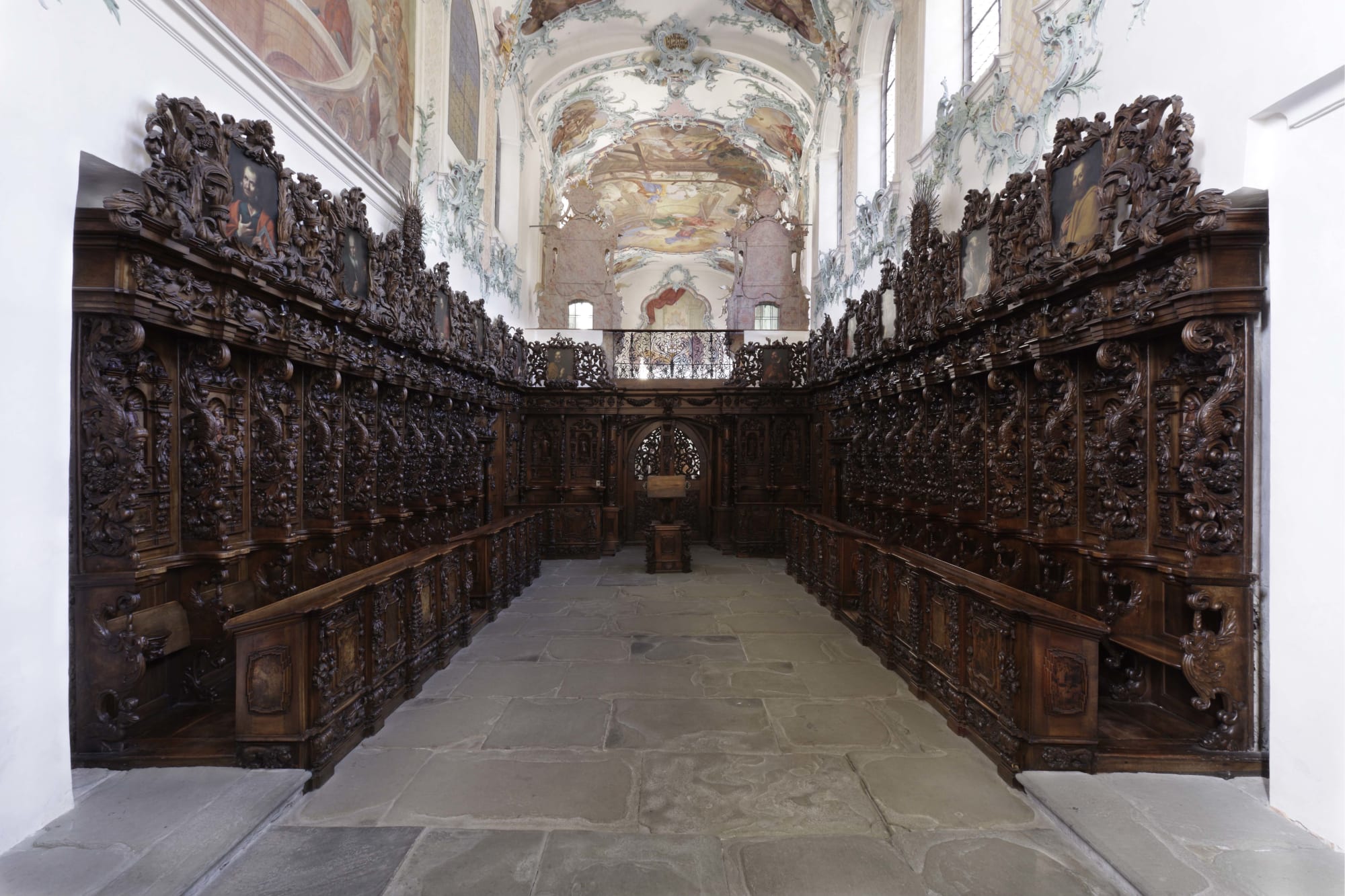
Under Viktor Fehr, the monastery complex was converted from a Carthusian monastery into a feudal manor house. The landowning family lived in the prior's quarters. The refectory became a representative dining room, and the chapter house became a reception room. The monks' choir served as a private church for the Protestant family for baptisms, weddings and funerals. Thus, the artistically valuable furnishings from the monastery era became the backdrop for an upscale bourgeois lifestyle.
The demolition of the north wing of the Great Cloister with the northern monks' cells was the most significant alteration to the monastery complex. On the south wing, Viktor Fehr added a striking architectural feature around 1880 with the addition of the loggia with terrace. This structure in front of the main entrance to the landlord's residence refers in various ways to the building's function as a manor house. Inside, the conversion of the former monastery kitchen into a panelled room in neo-Renaissance style is the most striking manifestation of the new landlord Viktor Fehr's influence.
1977: The Kartause Ittingen Foundation is established
Following the Second World War, the cost of maintaining the extensive premises exceeded the means of a private family. In 1977, the Kartause Ittingen Foundation was established to purchase the complex and put it to new use. The Ittingen Museum opens in the inner cloister of the former monastery in 1983.